A Tale of Three Brothers and a Hundred Coins
The eight-chapter original tale, titled Sefu’s Garden, continues the journey begun in Journey to Ọjà, following a young farmer named Sefu who must choose between immediate wealth and the slow, yet rewarding, work of cultivation.
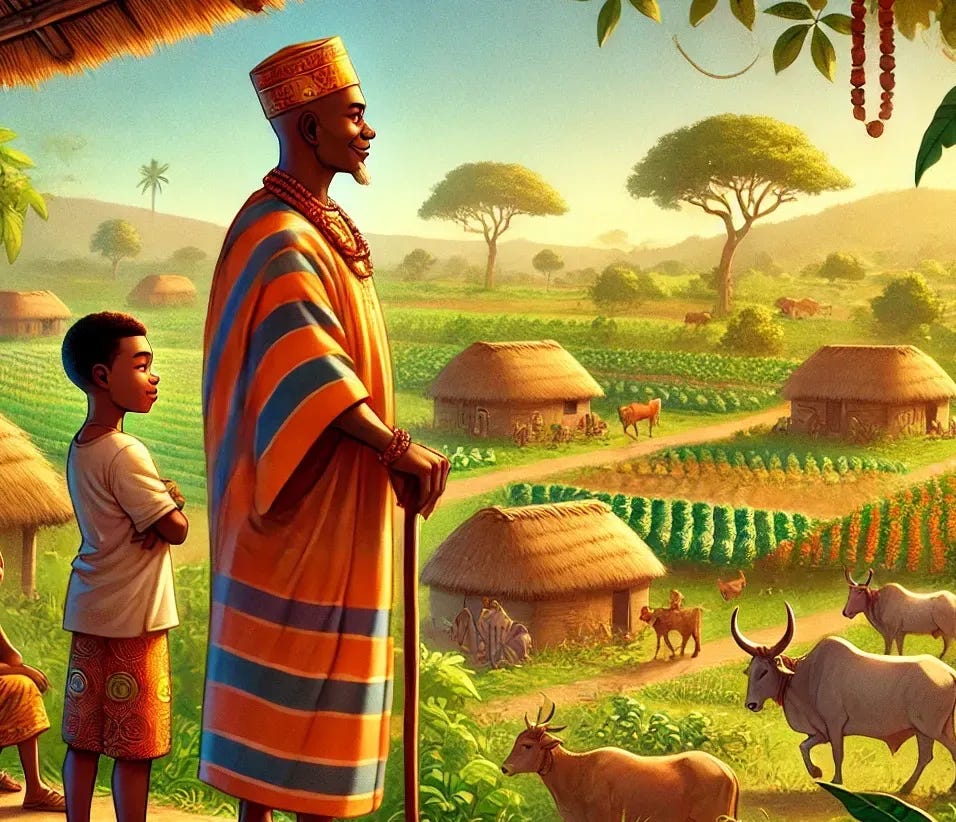
When a travelling merchant offers to buy his three plots for a sum beyond his dreams, Sefu imagines a new life in the bustling market town of Ọjà. His father, Obi, and his older brother, Jabari, remind him that some treasures cannot be bought. Their counsel, along with the quiet discipline of his garden, form the heart of this sequel.
A Parable of Three Brothers
One morning after the merchant’s offer, Sefu walked between rows of okra and beans. The soil, damp and dark, clung to his fingers. The thought of the merchant’s glittering coins tugged at his mind. Jabari joined the young farmer beneath a pawpaw tree and shared a story, “There were once three brothers, each given a hundred gold coins.”
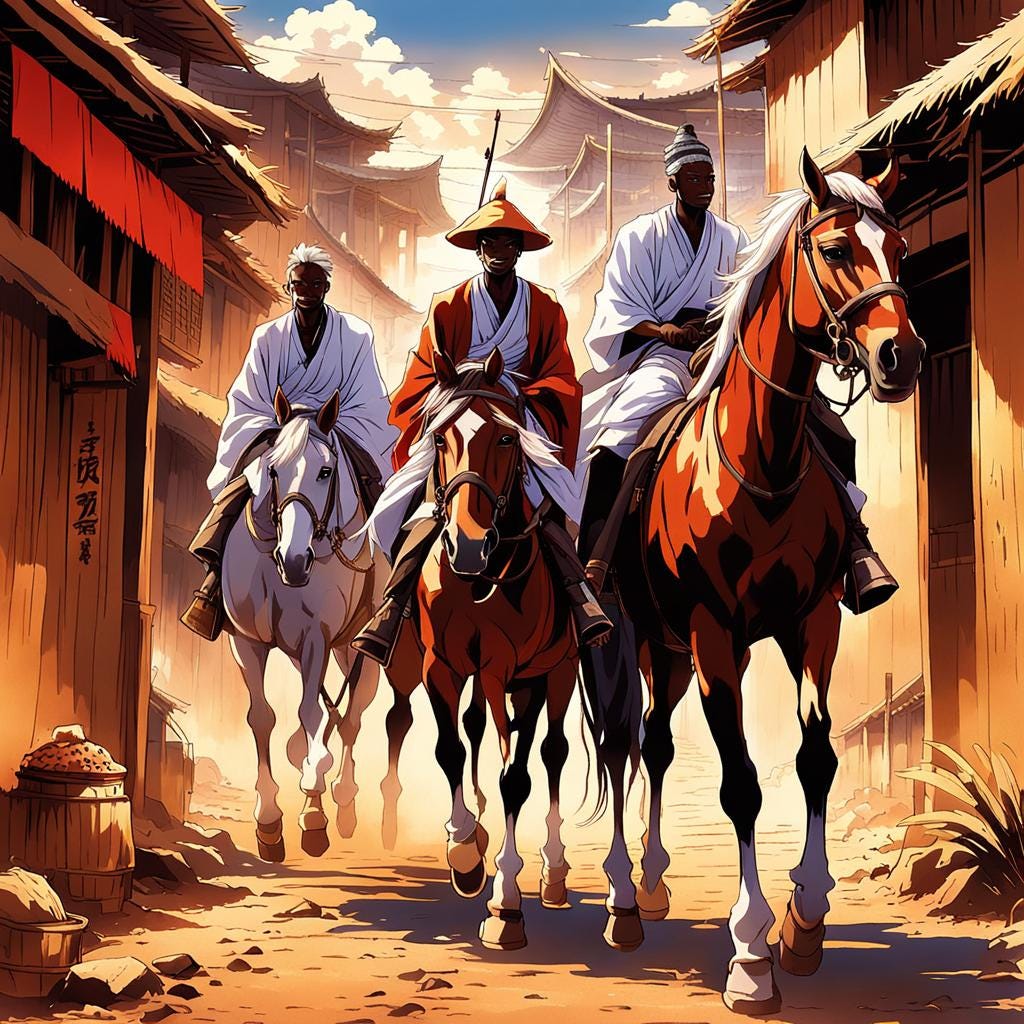
The first brother poured his inheritance onto a woven mat and watched the coins catch the morning light. The metallic chime made his heart race. He bought the finest horse in the market, its coat shining like polished ebony, and ordered a tailor to sew him robes of imported cloth. He filled his courtyard with friends, musicians, and laughter.
The scent of roasting goat, fragrant rice, and palm wine drifted through the night. With each purchase, a coin rang on a counter, and the purse at his waist grew lighter. At first, he shrugged and said, “Life is too short,” revelling in the applause of neighbours. Weeks later, he found himself staring at an empty pouch and a quiet compound. He went to his brother’s houses barefoot, dust clinging to his ankles, and knocked softly. Shame warmed his cheeks when he whispered, “Can you spare a coin?” The wind whistled through his straw-thin plans.
Sefu winced. “He must have felt hollow,” he murmured.
Jabari nodded. “He did.”
The second brother untied his pouch in the privacy of his hut. He sat by the light of a low-lit lamp and spread the coins in neat rows. He drew lines in the earth, dividing them by the seasons and years he hoped to live. He placed each small stack into clay pots, sealed and buried them beneath floorboards and sleeping mats. He ate millet porridge and dried fish, never sweetening his tea, constantly reminding himself that his future depended on these coins. When the first brother came, gaunt and desperate, the second brother’s fingers twitched toward his hidden stores, then clenched. “My coins are accounted for,” he said, eyes darting to the floor. He felt safe surrounded by his hoarded wealth, yet the safety was as stiff as his mat. He lived in a house of sticks; upright, but creaking under every gust of wind.
“The second brother sounds careful,” Sefu observed, “but also alone.”
“Yes,” Jabari replied. “He was so afraid of hunger that he tasted nothing else.”
The third brother walked out into the morning with his pouch and considered the fields beyond the village. Half of his coins he entrusted to the banker, watching the clerk’s pen scratch his name in the ledger. It felt like planting seeds he would not see for a long time. With the other half, he bought a small plot of land with dark, soft soil. He bent his back to the earth, pressing cowpea seeds into furrows with calloused fingers. Under the sun, he sweated, his tongue dry, yet his heart beat steady. He slept soundly and woke before dawn, eager to see green shoots breaking through the soil.
Seasons passed. His farm became a patchwork of millet, maize, and groundnuts. He sold some harvest, saved some, and always set aside a handful of seeds for the next planting. When his shoes wore through, he mended them and laughed, telling himself, “Life is short, but so are these stitches.” When he longed for a carved drum or a brightly dyed cloth, he waited for the harvest, then walked to the market with a basket of produce and coins earned from his crops. When the first brother arrived, thin and ashamed, asking for coins, he gave him a hoe instead and said, “Your hands are stronger than you know.” When the second brother arrived with a clay pot of coins, he smiled. “Let us put your treasure to work. The soil will teach you patience, and the bank’s interest will teach you trust.”
Sefu could almost see the third brother’s calloused hands and the way the sun glinted on the banker’s ink. “He must have felt proud,” he said, “but also tired.”
“He felt content,” Jabari replied, “and he learnt that tiredness from honest work feels different from exhaustion caused by worry or regret.
Subtext and Invitation
As Jabari’s story unfolds, Sefu weighs the merchant’s offer against the lessons of the parable. He thinks about the first brother’s empty hands and the second’s clenched fists, and he imagines the third brother kneeling in a field, planting seeds with patience. The tale of three brothers sits with him like a seed, ready to sprout into action. Will Sefu chase the glitter of instant wealth, hoard his treasure, or cultivate a foundation that endures?
Sefu’s Garden, the sequel to the soon-to-be-released Journey to Ọjà, invites you to follow a young man as he navigates the tension between immediate reward and lasting fulfilment. Jabari’s parable offers guidance, but Sefu’s decision and the consequences that follow unfold only within the pages of the book.