What If the Monster Was Just a Shadow?
5 Lessons From the Forest That Can Help You Overcome Fear and Connect with Yourself
There’s a moment in every great story when the protagonist is alone, unsure, and facing something unknown — not outside, but within.
In Night in a Wood Cabin, a poetic and suspenseful coming-of-age tale rooted in the ancient storytelling traditions of Ilé-Ifẹ̀, young Nia enters a forest in search of wonder, only to confront the shadows of her own imagination.
But what if those shadows weren’t monsters at all?
What if they were simply echoes of old stories we inherited, stories we outgrew, but never questioned?
Fear has a way of making everything seem bigger, darker, and more perilous than it actually is. But what if the things we fear most are only shadows and illusions that take shape only when we stop trusting ourselves?
In this article, we explore five key lessons from the forest: reflections that echo far beyond the pages of a children’s tale. Whether you’re navigating fear as a parent, a young professional, or simply someone craving clarity in uncertain times, these insights invite you to pause, breathe, and see things differently.
1. The Forest Isn’t the Enemy — Your Thoughts Might Be
We often assign danger to unfamiliar spaces simply because we can’t predict what lies ahead. In the book, Nia enters the forest full of curiosity… until night falls. Suddenly, the same branches that danced in the sunlight began to scratch against her imagination. Every sound becomes a threat. Every shadow, a monster.
But what changed wasn’t the forest; it was her perception.
“Maybe the shadows aren’t monsters,” Nia whispers. “Maybe they’re just shadows… and what harm has a shadow ever caused anyone?”
Lesson: The unknown isn’t always unsafe. Sometimes it’s our unexamined fears that make it feel that way. When we explore rather than retreat, we often find clarity and calm hiding just behind the uncertainty.
2. Curiosity Can Be a Compass
Before fear crept in, it was curiosity that led Nia into the woods — not recklessness, but a quiet longing for something more. That desire to explore, to learn, to reach beyond the boundaries of the familiar, is something we all had once. But as we grow older, the world teaches us caution, often at the expense of curiosity.
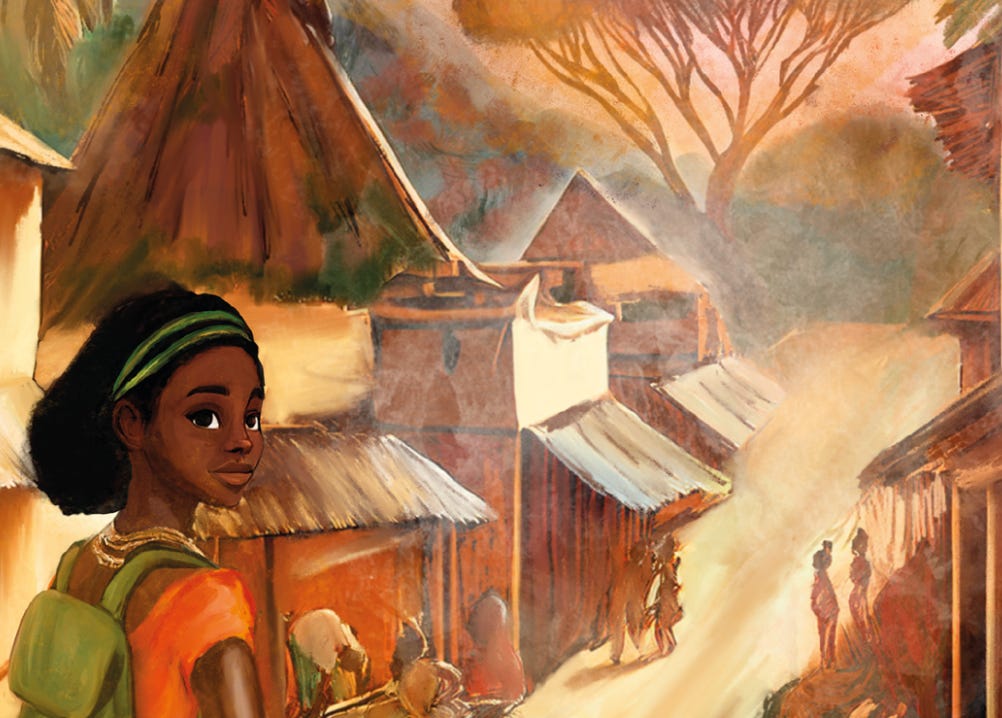
What if our inner compass isn’t broken — just buried?
Lesson: Curiosity is not the opposite of fear. It’s the remedy. If we lead with wonder instead of worry, we shift our focus from what could go wrong to what we might discover.
3. What You Focus On Expands
One of the most memorable scenes in Night in a Wood Cabin features a wise merchant showing Nia how attention shapes perception. He asks her to focus on green leaves, green vines, and green moss, and then asks her to recall anything red. She can’t. But when she shifts her awareness, red suddenly appears everywhere: berries, blossoms, rust-coloured bark.
What we look for, we find. What we fear, we amplify. What we believe, we often reinforce without even realising.
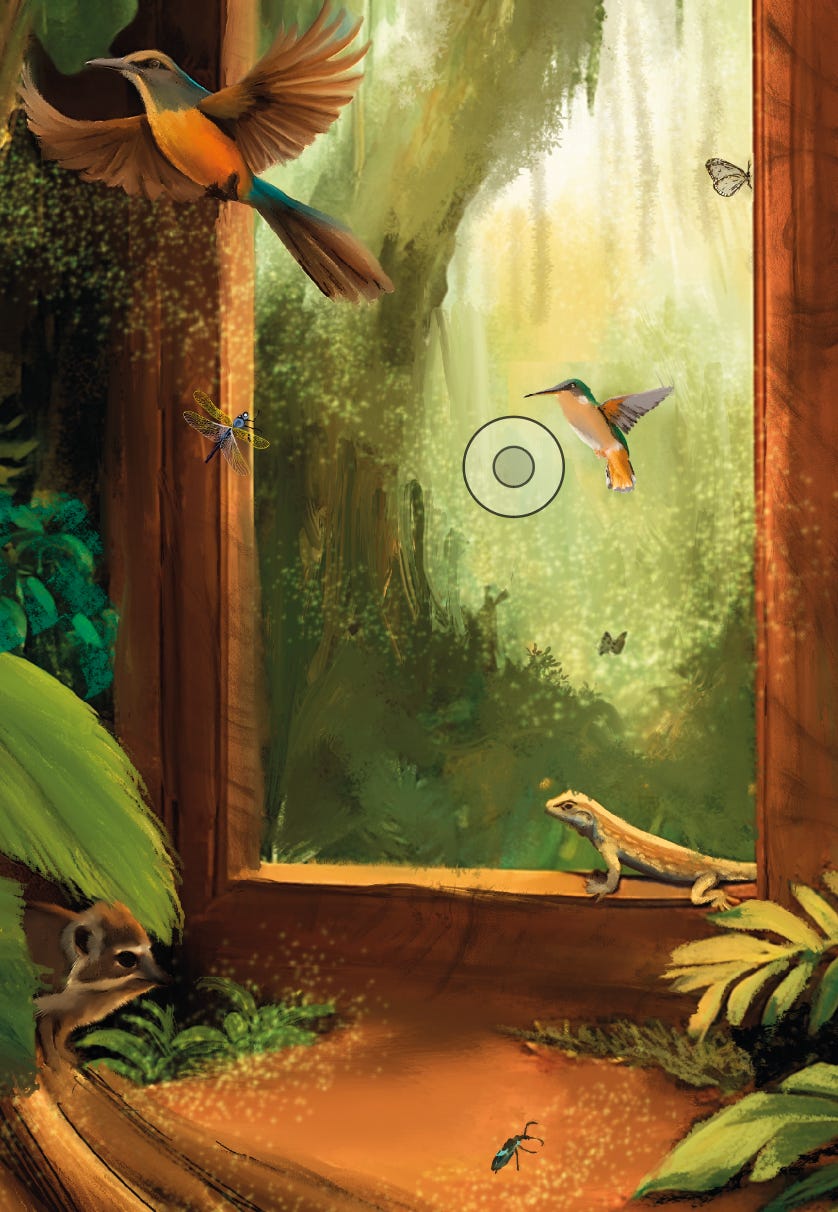
“When we only look for shadows,” the merchant tells her, “we forget that there is colour everywhere, if only we choose to see it.”
Lesson: Choose your focus with intention. Your mind is powerful enough to transform shadows into monsters, but it can also turn uncertainty into opportunity.
4. Stories Shape Us — So Choose Yours Wisely
Throughout the book, Nia wrestles not only with the forest, but with the stories she’s grown up hearing: tales of werewolves, shape-shifters, and eerie creatures that haunt the woods at night. These myths weren’t meant to trap her, but to teach her a lesson. Yet stories, when left unchallenged, can become cages.
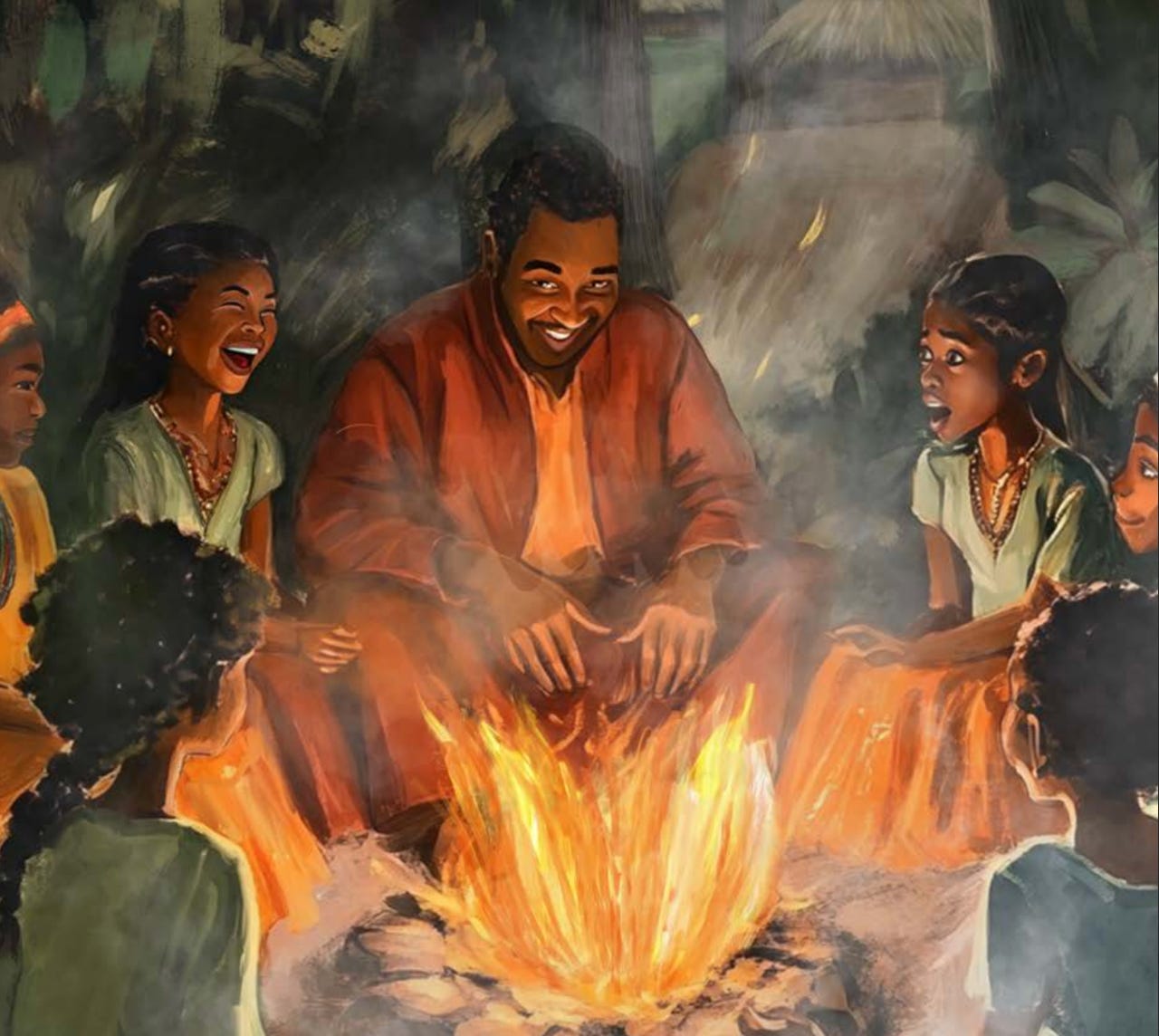
Who told you the world is dangerous?Who decided you weren’t brave enough?Who said fear must always win?
Lesson: You don’t need to abandon your stories — but you must rewrite the ones that no longer serve you. The power of storytelling isn’t just in what it teaches others, but in how it redefines us.
5. Courage Doesn’t Mean You’re Not Afraid — It Means You Go Anyway
One of the most poignant moments in the story is not when Nia defeats a monster, but when she dreams and realises there was no monster at all. There was only her wrestling with her own fear, reshaping her own perception, reclaiming her own power.
“The brighter the light of her torch shone, the smaller the dragon got, until it completely dwindled in size and fluttered away like a fly.”
Sometimes, fear is just the mind’s way of asking us to pay attention. Courage doesn’t silence fear; it reframes it. Gaining a better understanding of a situation, or of yourself, is often the first heroic act.
Lesson: Bravery isn’t always a grand gesture. Sometimes, it’s simply a matter of choosing to stay with discomfort long enough to understand it.
Final Reflection — The Forest Within Us All
The most important journey Nia takes isn’t through the forest; it’s the journey inward. And perhaps, that’s the journey we’re all on. Night in a Wood Cabin whispers a powerful truth: fear is natural, but the scenarios it presents are not final.
In Night in a Wood Cabin, children are entertained, but adults are invited to remember: the biggest shadows often come from the smallest fears left unexplored. If we continue to pass those fears down through generations in our parenting, leadership, and lifestyle, we perpetuate the illusion of monsters.
The stories we inherit are not the end of the story.
The monsters we fear are not always what they appear to be.
And sometimes, the shadows we run from… are our own.
What if the monster isn’t real at all, but a shadow and a reminder that it’s time to turn on your own light?
—
Ready to explore your own shadows?
Night in a Wood Cabin by Walé Akíngbadé will be available for purchase from April 2025 on Amazon, Waterstones, and Foyles.
🎵 Bonus: Each chapter in the book is accompanied by a gentle instrumental track — a musical reflection to help you digest each lesson at a deeper level. You can scan the QR code at the back of the book or visit thinkgti.com to listen.